Where is the airport located
Contact information
- Address: Airport Road, Maiduguri 151571, Borno.
- GPS coordinates: 11.854161, 13.083885.
- Phone: +2348169315924.
- Official website:
Origins, Upgrades & Resilience
Maiduguri International Airport (IATA: MIU, ICAO: DNMA), formerly known as Muhammadu Buhari Airport, traces its roots to the earliest days of Nigerian aviation—historic accounts record that an Airco DH.9 biplane landed here in 1925, one of the first aircraft ever in the country. Over decades it served regional flights amid challenging security contexts, even sustaining damage during Boko Haram–related rocket attacks in December 2021.
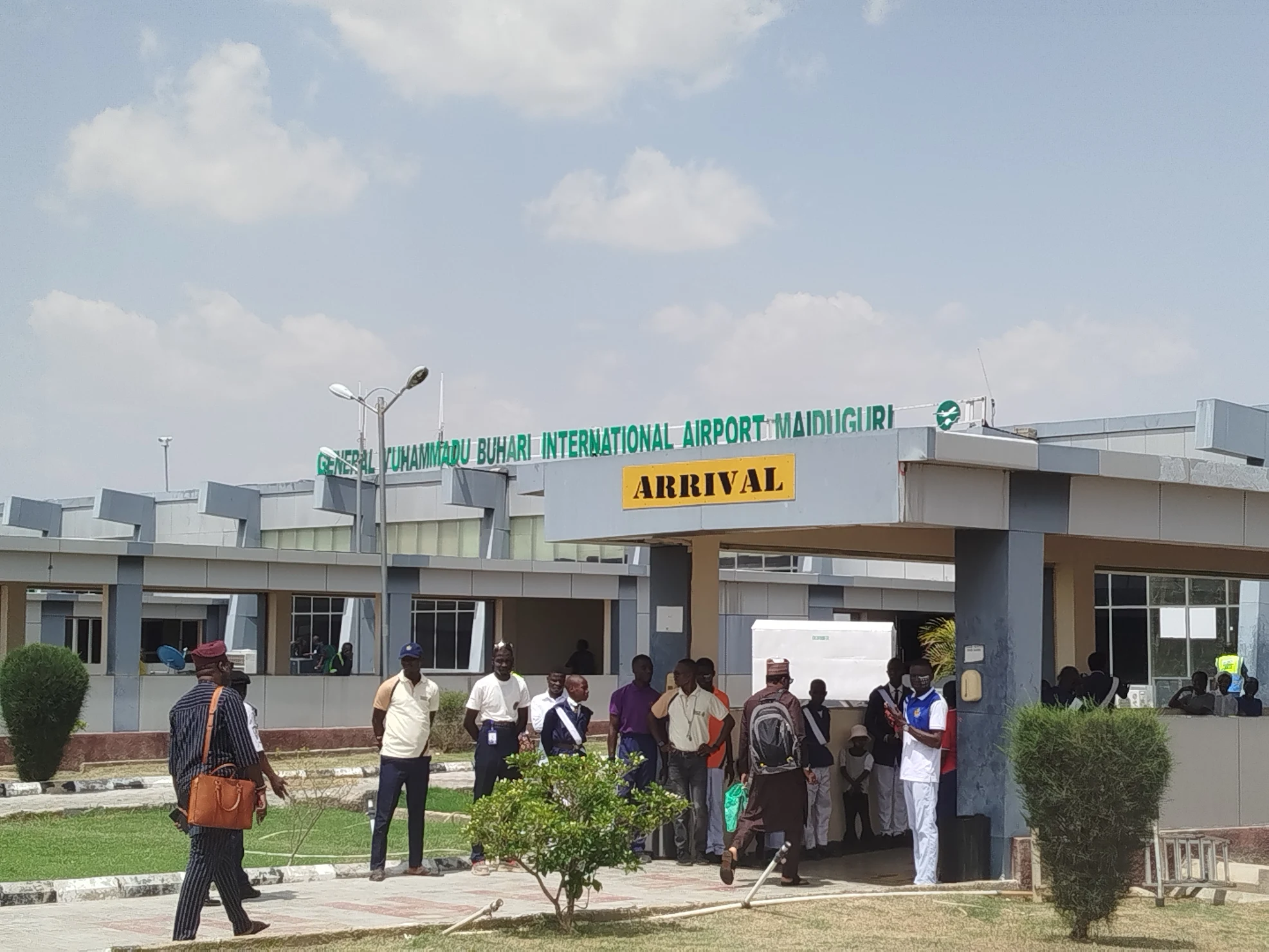

Recognising its strategic significance, the Senate in 2023 pushed for its elevation to international status, highlighting Maiduguri as the lone regional capital without such a facility, despite border proximity to Chad, Niger and Cameroon.
In October 2024, the Federal Government officially approved the upgrade. Renovations—including extending the 3 000 m asphalt-concrete runway (05/23), modernising terminal infrastructure and bolstering safety systems—prepared the airport for international operations starting 1 January 2025.
Complementary developments included a ₦1.4 billion dualisation of the 1.9 km access road linking the airport to the city, improving traffic flow and logistics ahead of the international launch.
The inauguration was hailed as a symbol of resilience and rebirth after years of insurgency, positioning Maiduguri as a gateway not only to Nigeria’s Northeast but also to broader international markets—including planned links with the Middle East, Africa and beyond.
Operations & Regional Impact
As of mid-2025, Maiduguri International Airport does operate international flights, marking the first such hub in Nigeria’s Northeast. However, direct scheduled commercial international routes remain limited in the initial phase. International services are being phased in, starting with airlines from neighbouring countries and the Middle East.
On the domestic front, regular flights continue between Maiduguri and Abuja, flown by Air Peace and Real Tonga—around 38 flights/month or roughly 7 flights/week—each lasting approximately 1 h 40 m over the ~441 mi route.



There are presently no other domestic or international non-stop destinations scheduled, though connecting flights via Abuja can reach cities such as Lagos, Accra, Cairo, Addis Ababa, Kigali, Abidjan and Douala.
Terminal facilities have been upgraded to international standards: passenger halls, immigration and customs, modern wheelchair-accessible fixtures, duty-free shops, free Wi-Fi, restaurants, prayer rooms, VIP lounges, ATM and other amenities—all supplied under FAAN management.
The airport’s strategic modern meaning lies beyond passenger traffic. It is envisioned as a cargo and trade hub for the Northeast, facilitating export/import of goods, easing humanitarian logistics, and decongesting Abuja/Lagos airports. Moreover, its upgraded status supports government presence, investment flows, and tourism revival in Borno State and neighbouring countries.
Summary Table of Key Facts
- First aviation use: ~1925 (Airco DH.9 landing)
- Runway: 3 000 m asphalt/concrete (05/23)
- Attack impact: Hit during December 2021 rocket strikes
- Upgrade: Approved Oct 2024; operations began Jan 1 2025
- Roadworks: ₦1.4 billion dualisation of access route
- Domestic flights: Air Peace & Real Tonga to Abuja (~38/mo)
- International: Operational post-Jan 2025; phased introduction of foreign airlines
- Facilities: Modern terminal, immigration, customs, lounges, Wi-Fi, shops, prayer rooms, accessibility
- Economic role: Cargo hub, regional development, decongestion, trade gateway
In essence, Maiduguri International Airport has evolved from a modest regional airstrip into a modern international gateway, powered by strategic upgrades, infrastructure investments and the ambition to reconnect Northeast Nigeria with the world.
Maiduguri International Airport reviews
Maiduguri International Airport earns praise for its cleanliness, smooth check-in and arrival processes, friendly staff and strong sense of hospitality, with many travelers noting the professionalism and cultural sensitivity of the team. Shops for food and drinks add to the convenience, and flights generally keep to time.
However, shortcomings remain: the airport is often described as falling short of full international standards, with limited facilities, no proper lounge for frequent travelers, and inadequate amenities such as air conditioning—particularly uncomfortable given Maiduguri’s hot climate.