Where is located on the map
Contact information
- Address: BUK Road, Kofar Bompai, Kano 700271, Kano.
- GPS coordinates: 11.980231, 8.495849.
History of Appearance
Kofar Gadon Kaya stands among the storied city gates of ancient Kano, a vestige of its fortified walls that once enclosed the old city. It is one of the 15 historic gates mentioned in Hausa architectural tradition, each assigned a gatekeeper (Sarkin Kofa) and built as defensive access points, rigidly controlled during times of war and peace alike.
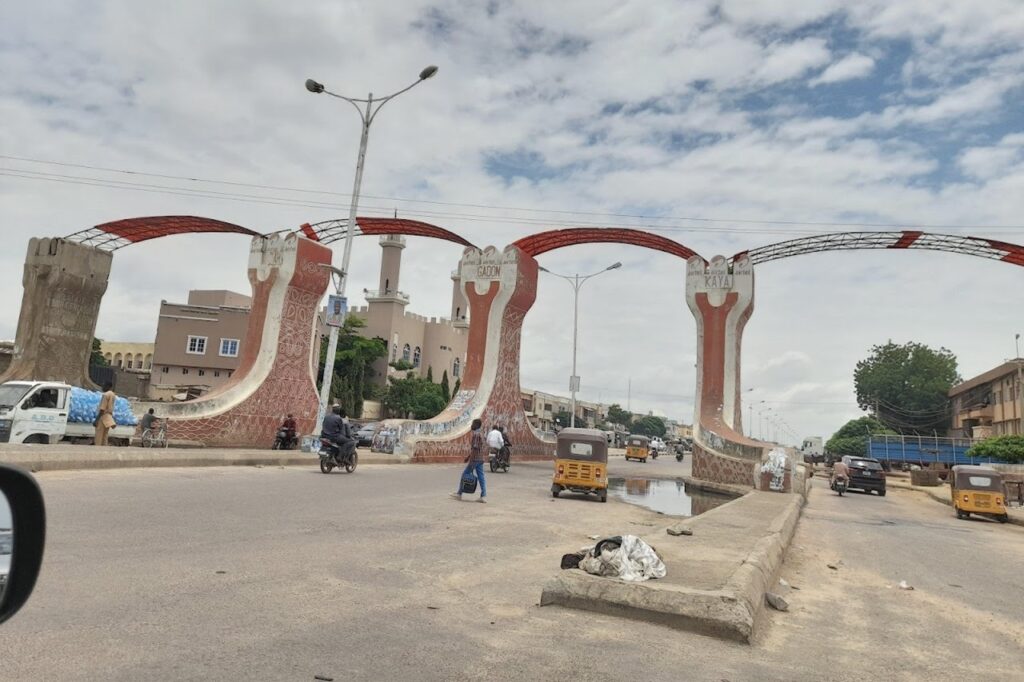
Specifically, Gadon Kaya served as a critical entry route and, on 3 February 1903, bore bullets in the British Expeditionary Force’s assault that breached Kano’s defenses from the southwest.
Over time, modern infrastructure needs ushered in new gateways. The original Gadon Kaya gate has partially yielded to vehicular expansion, with a neighboring reconstructed version blending into the evolving urban landscape.
Несмотря на то, что прилегающая территория стала более коммерческой и оживлённой, ворота сохраняют своё символическое значение как напоминание о легендарном прошлом Кано.
Architectural Features
Rooted firmly in traditional Hausa design, Kofar Gadon Kaya exemplifies the materials and methods of constructing fortified gates of its era. These structures typically used mud, dried grasses, timber, and brick—often local and sustainable materials—and stood roughly five meters tall and ten meters long, decorated with cultural icons like the tambarin arewa motif.
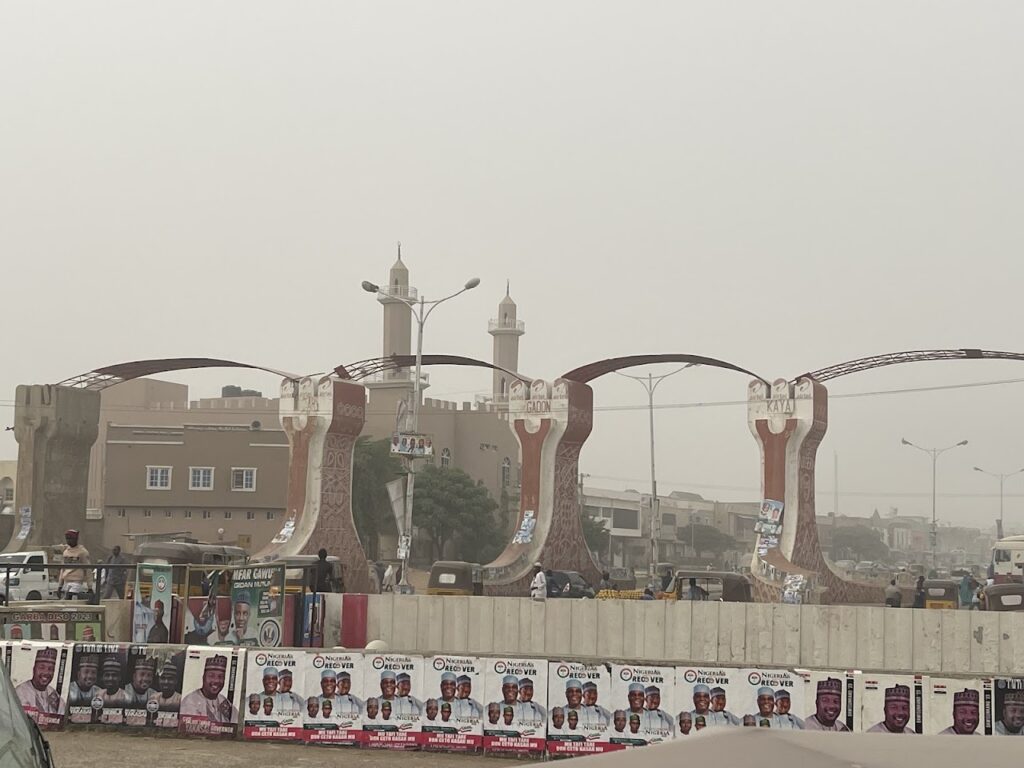
Though precise measurements of Gadon Kaya are not documented, its lineage within this architectural system suggests a similar scale and aesthetic.
Crafted by local blacksmiths from iron ore sourced from nearby Dala Hill, parts of the gate reflect metalworking traditions and bear tangible reminders of colonial confrontation—bullet marks from the 1903 invasion still trace the surface.
The gate’s durability and ornamentation echo a balance of function and cultural symbolism—designed to protect, centrally feature in civic life, and reflect the identity of the Hausa Kingdom.
Reviews about Kofar Gadon Kaya
Kofar Gadon Kaya is remembered both for its deep history and for the lively atmosphere that surrounds it today. Visitors describe it as one of the tallest and most enduring ancient gates of Kano, carrying the legacy of Emir Muhammadu Nazaki and marking the very route through which British forces entered the city in 1903.
Its name itself comes from a witty exchange with a local farmer, giving it a cultural flavor that blends humor with heritage. The gate, last renovated in 2012, still stands proudly along Aminu Kano Way in Gwale, serving as a striking reminder of the fortified city walls that once encircled Kano.
Nearby, the Uthman bin Affan Mosque adds a spiritual dimension to the site, drawing worshippers and hosting weekly tafseer lectures by prominent scholars, which makes the area a hub of both history and living tradition. For those exploring Kano’s heritage, Gadon Kaya offers not only architecture but also an active cultural landscape.
Video and 3D panorama
How to get to the place
In sum, Kofar Gadon Kaya is more than a leftover city entry—it is a resilient emblem of Kano’s defensive legacy and Hausa craftsmanship. Though time and asphalt have diminished its original form, its presence continues to open a gateway into the layered history and artistry of northern Nigeria.